
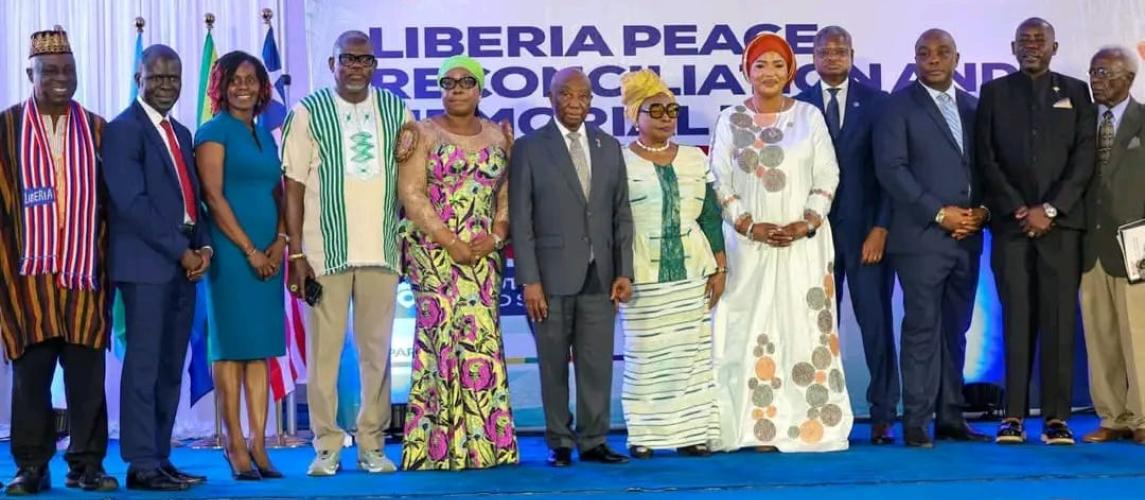
President Boakai Inaugurates Steering Committee for Liberia Peace, Reconciliation and Memorial Museum ~ Says, “Liberia Must Confront Its Past to Secure Lasting Peace”
“A nation that does not face its past cannot fully secure its future,” President Boakai said as he officially opened the Committee’s three-day inaugural meeting.
The proposed Museum forms part of the Government’s efforts to preserve Liberia’s historical heritage and advance national reconciliation. President Boakai said the Institution would preserve archives, photographs, documents and testimonies so as to educate future generations about the consequences of war, and provide a space for remembrance and reconciliation.
The President said victims, survivors and their families must help shape the museum from its conception through its operation, warning that overlooking their experiences would undermine the Institution’s purpose.
“This Museum belongs first to the victims and survivors of our conflict, and to their families. Nothing about them must be done without them,” he said.
President Boakai confirmed that the Museum’s Project Charter was signed on Friday, November 13, setting out its purpose, governance and programme of work. He charged the Steering Committee with using its inaugural meeting to finalize an implementation plan and budget, settle priorities for the five technical working groups, and identify financing for the first 90 days.
“The Liberian people are watching, and they are waiting, not for speeches, but for action,” he reminded the Committee.
The President called for feasibility studies, careful design, and secured financing to sustain the Museum beyond the life of the current Administration.
The Liberian Leader announced that the Government is to name a Presidential Committee in the coming days to advise on national history and heritage priorities, including the National Historical Recovery and Repatriation Initiative and the revival of the National History Project, both recommended by the Truth and Reconciliation Commission.
Steering Committee Chairperson Hadja Mamaka Bility, Minister of State for Presidential Affairs, said the Government has set a three-year target to develop the Museum. She said the institution would reflect Liberia’s history across generations, including the experiences of people who lived in what is now Liberia before the 1800s and of Africans forcibly taken to the Americas.
“We are building not just a structure, but a shrine that embodies our true aspirations and resilience as Africans,” Minister Bility said.
Chairperson Bility acknowledged the contributions of delegations from Rwanda and South Africa, whose experiences with remembrance and reconciliation have informed Liberia’s work. She said the decisions taken during the inaugural meeting would lay the groundwork for an institution that serves Liberians and welcomes the international community.
Ambassador Aliou Mamadou Dia, the United Nations Development Programme Resident Representative, and Co-chair of the Steering Committee, reaffirmed UNDP’s support for the Project. He said Liberia’s study tour to Rwanda and South Africa offered lessons in preserving historical memory, confronting injustice and using public education and dialogue to strengthen peace.
Ambassador Dia called for meaningful participation by victims, survivors and their families, along with women, young people, historians, educators, local communities, and civil society organizations. He said sustained political leadership and cooperation among the Government, the United Nations, development partners, civil society and the private sector will be essential to the Museum’s credibility and long-term sustainability.
“Their stories and perspectives must not be peripheral to the process. They must help shape its very foundation,” the UN Envoy said.
Cameroon’s Ambassador to Liberia who is the Doyen of the Diplomatic Corps, Ambassador Beng’yela Augustine Gang, urged the Committee to draw lessons from Rwanda and South Africa while grounding Liberia’s approach in its own history and the circumstances that led to its civil conflicts. He noted that Liberians hold differing views on accountability, reparations, forgiveness and inclusive development, and that the country’s path forward must reflect the choices of Liberians.
Ambassador Gang further urged the Committee to present a balanced account of Liberia’s history, including evidence and artifacts that may challenge political interests and deeply held views. He reaffirmed the Diplomatic Corps’ support for Liberia’s reconciliation efforts through international cooperation and resource mobilization, recognizing the contributions of ECOWAS and the United Nations Mission in Liberia to the peace process.
President Boakai thanked Rwanda, South Africa, UNESCO, the United Nations and UNDP for their support. He stressed that Liberia must lead the process and tell its history in its own voice, especially for young Liberians who were born after the war or were too young to remember it.
